

Reducing Humidity in Florida Homes
In Florida, humidity isn’t just a summer issue; it’s a year-round reality. Homeowners in Sarasota, Bradenton, and Lakewood Ranch often notice their homes feeling damp, sticky, or uncomfortable even when the thermostat says 72°F.
If you’ve ever lowered your AC temperature only to feel like you’re sitting in a cold, damp towel, you don’t have a temperature problem; you have a humidity problem. Reducing humidity in Florida homes is about more than avoiding musty smells. It plays a significant role in your health, energy bills, and protecting your property from the “Florida funk.” Additionally, reducing humidity in Florida homes is crucial for maintaining comfort and preventing mold growth.
The “Clammy Home” Checklist
Not sure if your humidity is too high? Look for these local warning signs:
Why Air Conditioning Alone Often Fails
A common misconception is that air conditioning automatically handles humidity. While AC systems do remove some moisture, they are “temperature-first” machines.
The Problem with “Short-Cycling”
In Sarasota and Manatee counties, many homes have AC units that are actually oversized. While this sounds like a good thing, it leads to short-cycling: the unit cools the air so quickly that it reaches the target temperature and shuts off before the blower has a chance to remove moisture from the air.
Furthermore, during our “shoulder seasons” (Spring and Fall), outdoor temperatures are mild, so your AC doesn’t run. This leaves your home at a comfortable 75°F, but with a soaring 70% humidity level, the perfect breeding ground for dust mites and mold.
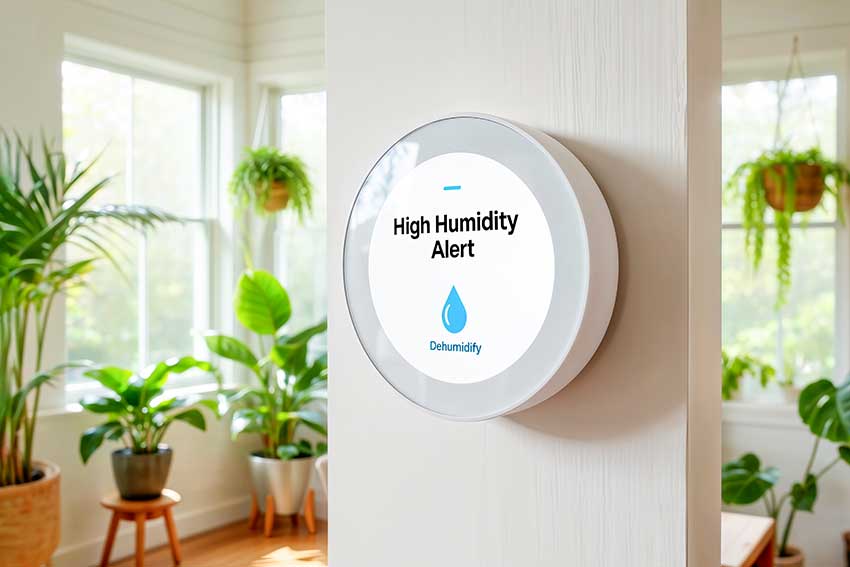
Pro Tip: For maximum comfort and health, your indoor humidity should consistently stay below 50%.
Long-Term Approaches to Reducing Humidity in Florida Homes
The right air conditioning system alone may not suffice for reducing humidity in Florida homes. Therefore, it’s important to explore additional methods.
Effective humidity reduction isn’t about a single adjustment or quick fix. It’s about using solutions designed for hot, humid climates.
In your quest for reducing humidity in Florida homes, consider installing a whole-house dehumidifier that operates independently of the AC unit.
HVAC Systems Built for Moisture Management
Modern HVAC and heat pump systems use advanced designs that allow longer, steadier operation. This helps remove more moisture without overcooling the home — a major advantage in Florida’s climate.
These systems are quieter, more efficient, and better suited for maintaining consistent indoor conditions.
Whole-House Dehumidification: A Foundation for Long-Term Comfort
For many homeowners, reducing humidity in Florida homes requires a solution that works independently of cooling cycles.
Whole-house dehumidifiers are designed to manage moisture throughout the entire home rather than room by room. They’re especially helpful when:
Instead of acting as a temporary solution, whole-house dehumidification supports consistent indoor comfort year-round.
To learn more about how these systems work, explore Airrific’s guide on whole-house dehumidifiers.
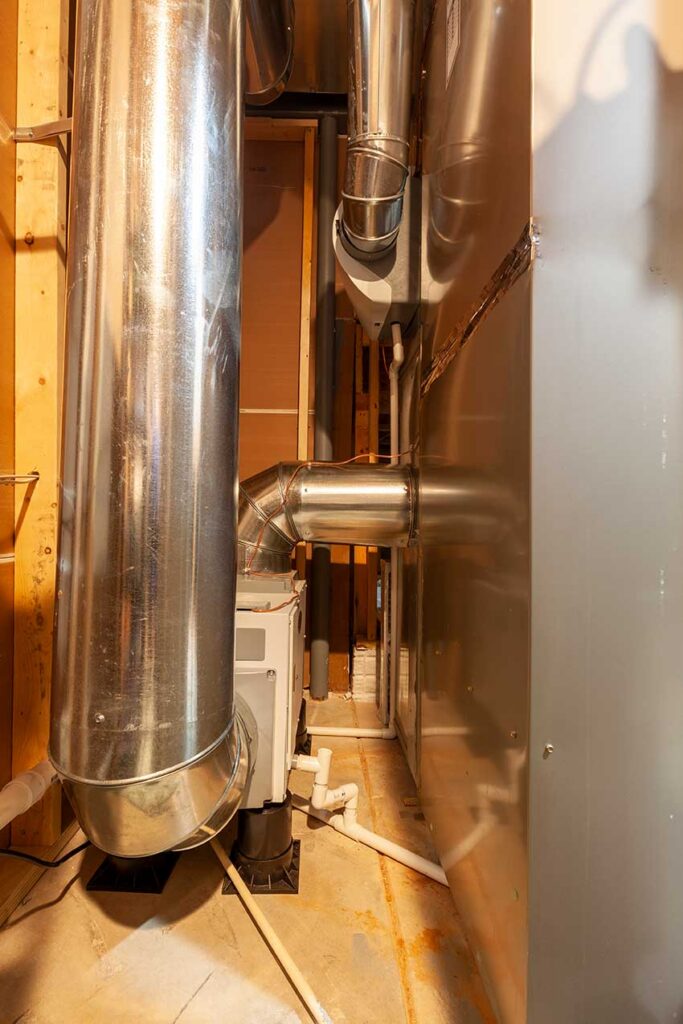
Reducing humidity in Florida homes by integrating a whole-house dehumidifier with the existing HVAC system
Whole-House Dehumidification vs. Standard AC
When it comes to reducing humidity in Florida homes, knowledge of your home’s climate is key.
For many Florida homeowners, the best solution for reducing is a system that works independently of the cooling cycle.
|
Feature |
Standard AC Unit |
Whole-House Dehumidifier |
|---|---|---|
|
Primary Goal |
Lowering Temperature |
Removing Gallons of Moisture |
|
Energy Use |
High (Compressor-heavy) |
Low (Targeted operation) |
|
Winter Utility |
Low (Rarely runs) |
High (Protects home year-round) |
|
Comfort Level |
Can feel “Cold & Clammy.” |
Feels “Crisp & Clean” |
Why This Matters for Snowbirds
If you leave your Venice or Bradenton home for the summer, a whole-house dehumidifier is your best insurance policy. It allows you to keep your AC at a higher temperature (saving money) while the dehumidifier ensures the air stays dry enough to protect your furniture and prevent mold growth while you’re away.
Integrated Indoor Air Quality (IAQ) Strategies
For homeowners, reducing humidity in Florida homes can be achieved through proper ventilation and dehumidification strategies that complement your HVAC system.
Taking steps to reduce humidity in Florida homes is imperative for a happier, healthier living space.
Humidity doesn’t exist in isolation. It interacts with airflow, filtration, and ventilation.
When moisture control is paired with advanced filtration, air cleaning, and properly sealed ductwork, the result is not just drier air, but cleaner, healthier indoor air.
Florida Humidity: The “Danger Zone”
Smart Daily Habits to Support Your HVAC
While technology does the heavy lifting, your daily routine in a coastal climate matters:
Ultimately, the goal of reducing humidity in Florida homes is to achieve a comfortable and healthy environment for all residents.
Why Local Experience Matters
Reducing humidity in a Siesta Key beachfront condo is a different science than a sprawling estate in Parrish. Backed by Proven HVAC Experience, Airrific Air Conditioning and Heating has specialized in the unique climate of Sarasota and Manatee Counties.
We understand how salt air, high ceilings, and seasonal occupancy affect your indoor air quality. We don’t just “fix ACs”, we engineer indoor environments that are healthy, dry, and efficient.
Stop Guessing. Start Breathing Easier.
If your home feels heavy or stale, it’s time to look beyond the thermostat. With today’s IAQ technology, you can enjoy a crisp, comfortable home regardless of what the Florida weather is doing outside.
Ready to find your “Goldilocks Zone”?
Contact Airrific today for professional humidity solutions & IAQ Audit. Let’s make your home the sanctuary it’s meant to be.