
Why Is My AC Leaking Water? Causes, Quick Solutions & When to Call for AC Repair
Understanding potential causes of AC leaking can empower you when dealing with HVAC issues.
Few things are more alarming than discovering a puddle of water around your indoor air conditioner. Whether you have a central air conditioner, heat pump, or ductless mini-split, water should never be pooling around the indoor unit. While your cooling system naturally removes moisture from the air every day, that water is designed to drain safely outside, not onto your floor.
In Florida’s hot and humid climate, your air conditioner does much more than cool your home. It also acts as a powerful dehumidifier, removing 5 to 20 gallons of moisture from indoor air every day, depending on weather conditions and system size. Normally, that moisture collects on the evaporator coil, drains into a condensate pan, and flows outside through a condensate drain line.
When that drainage process is interrupted, water has nowhere to go except into your home.
Ignoring AC water leaks can lead to damaged drywall, warped flooring, mold growth, and expensive repairs. Fortunately, most indoor AC leaks stem from a handful of common issues that can be diagnosed and corrected before they become major problems.
In this guide, we’ll explain why your AC is leaking water, what you should do immediately, and when it’s time to call a professional for expert AC repair.
Quick Answers About AC Water Leaks
Why is my AC leaking water inside?
The most common causes are a clogged condensate drain line, a frozen evaporator coil, a damaged drain pan, a faulty condensate pump, or improper installation.
Don’t hesitate to reach out for help if your AC is leaking and you’re unsure how to proceed.
Should I turn my AC off if it’s leaking?
Yes. Turn the system off immediately to prevent additional water damage and protect electrical components.
Can I keep using my AC if it’s leaking?
It’s best not to. Continuing to operate the system can worsen the problem and increase repair costs.
Can a dirty air filter really cause a water leak?
Yes. Restricted airflow can freeze the evaporator coil. When the ice melts, the excess water can overflow the drain pan.
What to Do First When Your AC Is Leaking
Before trying to determine what’s causing the leak, take a few simple steps to minimize damage.
Turn the Air Conditioner Off
Set your thermostat to OFF immediately. Continuing to run the system may allow more water to overflow and could damage electrical components.
Clean Up Standing Water
Use towels, a mop, or a wet/dry vacuum to remove water around the indoor air handler. Prompt cleanup helps prevent damage to flooring, drywall, cabinetry, and nearby furnishings while reducing the risk of mold growth.
Inspect the Air Filter
A clogged air filter is one of the most common reasons an evaporator coil freezes. If the filter appears dirty, replace it before restarting the system.
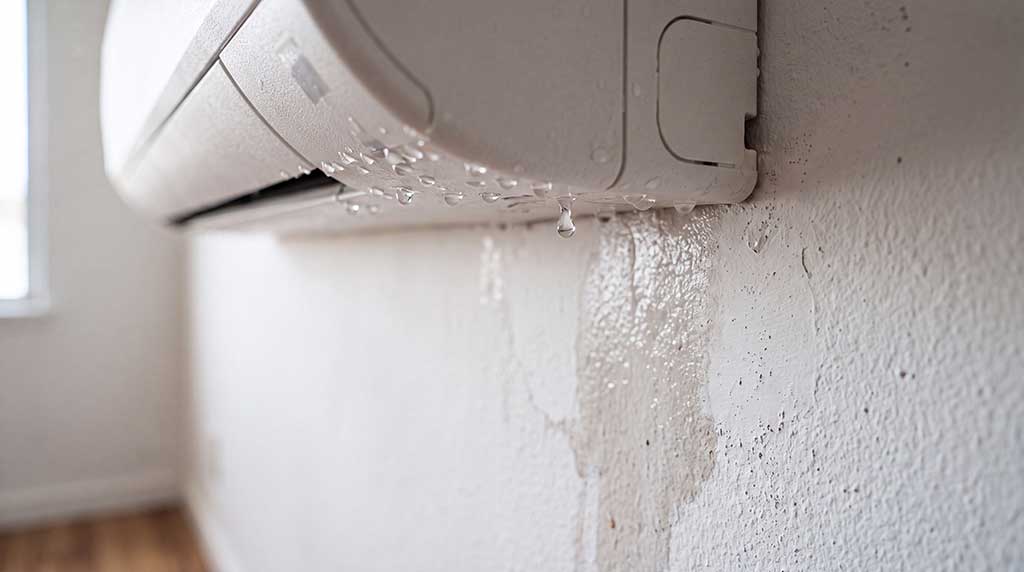
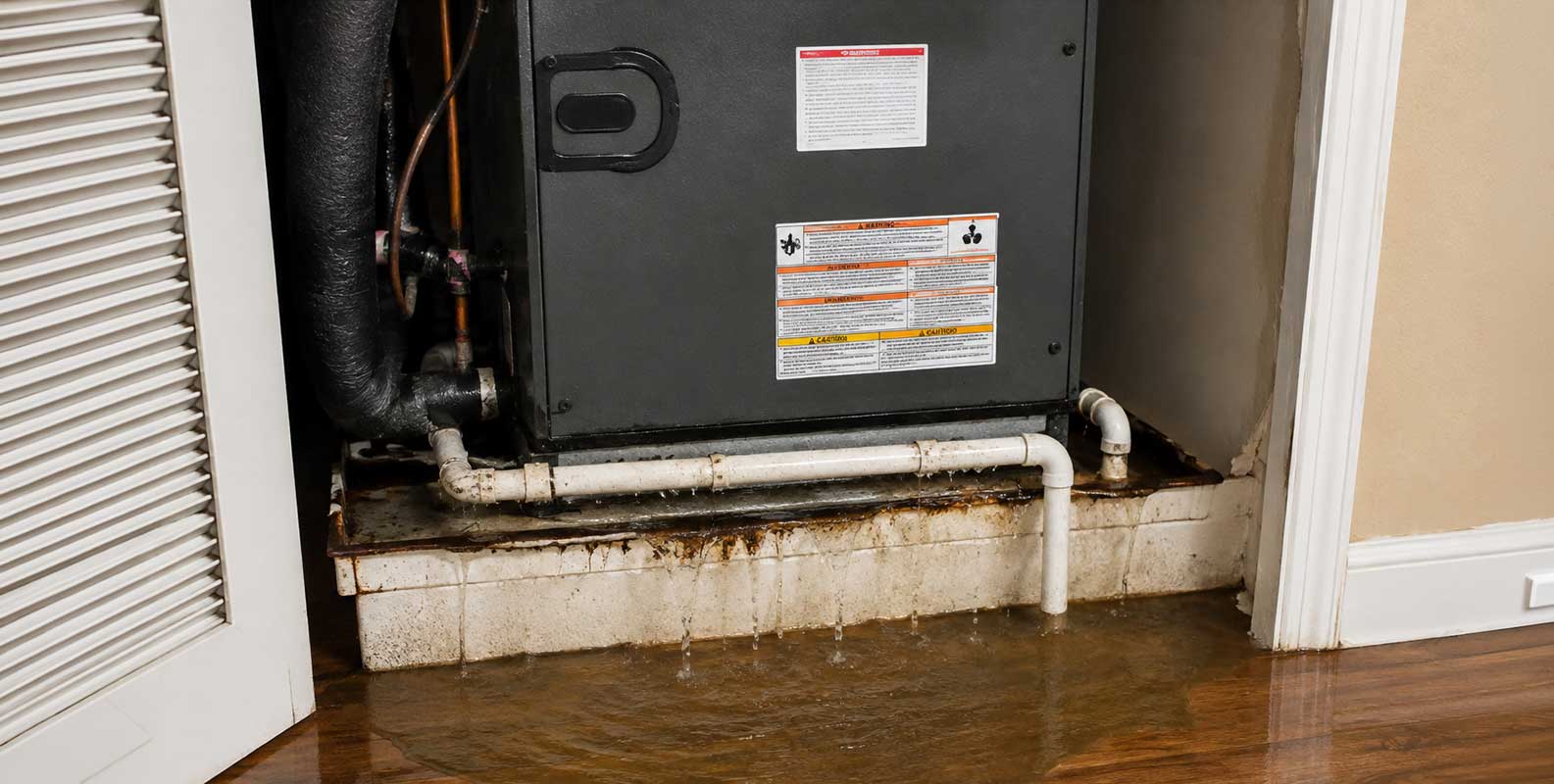
Water leaking from an indoor AC unit can cause costly drywall and floor damage.
Why Is My AC Leaking Water?
To understand why your air conditioner leaks, it helps to know how the cooling process works.
As warm, humid indoor air passes over the cold evaporator coil inside your air handler, moisture naturally condenses into water, much like droplets forming on a glass of iced tea. That condensation collects in a drain pan before flowing safely through the condensate drain line to the outside of your home.
If any part of that process is interrupted, water begins collecting inside the system until it eventually leaks onto your floor.
Here are the most common reasons this happens.
1. Clogged Condensate Drain Line (Most Common Cause)
A blocked condensate drain line is responsible for more AC water leaks than any other issue.
In Florida’s humid climate, algae, mold, dust, dirt, and other debris gradually accumulate inside the PVC drain line or drain trap. As the blockage grows, condensation can no longer drain outside, causing the drain pan to overflow.
Common signs include:
- Water around the indoor air handler
- Musty odors near the unit
- A full secondary drain pan
- The system shutting off if equipped with a safety float switch.
Minor clogs can sometimes be cleared using a wet/dry vacuum connected to the outdoor drain termination. More severe blockages should be professionally cleaned.
2. Frozen Evaporator Coil
frozen evaporator coil is another frequent cause of indoor water leaks.
When airflow becomes restricted, or refrigerant levels become too low, the evaporator coil can freeze into a block of ice. Once the system shuts off or begins defrosting, the melting ice creates far more water than the condensate pan can safely hold.
Common causes include:
- Dirty air filter
- Dirty evaporator coil
- Closed or blocked supply vents
- Blocked return air vents
- Refrigerant leak
- Blower motor problems
Because refrigerant and airflow issues require specialized equipment to diagnose, this repair should always be handled by a licensed HVAC technician.
3. Damaged or Rusted Drain Pan
If your air conditioning system is older, the condensate drain pan beneath the evaporator coil may have developed rust, corrosion, or small cracks.
Even when the drain line is working properly, water escapes through these damaged areas before reaching the drain opening.
In many cases, replacing the drain pan is a straightforward repair that prevents recurring water damage.
4. Faulty Condensate Pump
Not every air handler can rely on gravity to remove condensation.
Systems installed in attics, utility closets, finished basements, or interior rooms often use an electric condensate pump to move water to an appropriate drain location.
If the pump loses power, becomes clogged, or its internal float switch fails, water quickly overflows the reservoir and leaks into the surrounding area.
5. Improper Installation
If your system was recently installed and immediately began leaking, installation may be the problem.
The indoor air handler should be properly leveled and slightly pitched toward the drain connection. Likewise, the condensate drain line and trap must be installed correctly to allow water to flow freely.
Improper installation can lead to chronic leaks from the day the system begins operating.
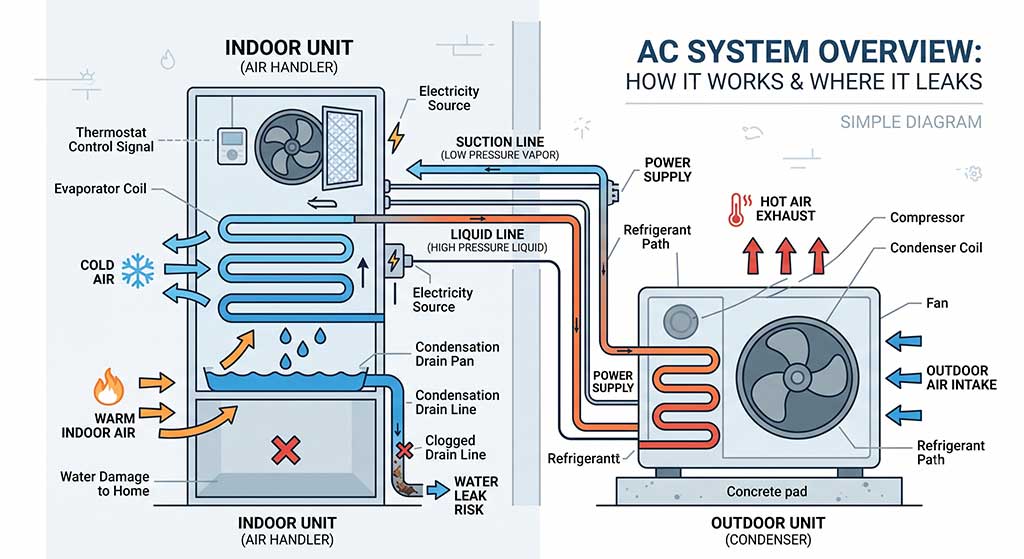
Diagram of an air conditioning unit showing how moisture collects around the cooling coil.
Signs Your AC Leak Needs Immediate Attention
Although a small puddle may not seem urgent, certain warning signs indicate that professional service should not be delayed.
Schedule AC repair promptly if you notice:
- Water dripping through the ceiling.
- Ice covering the evaporator coil or refrigerant lines
- Warm air blowing from your vents
- The system repeatedly shutting off.
- Persistent musty odors throughout your home
- Water near electrical outlets or wiring
- The leak returns after replacing the air filter or clearing the drain line
Addressing these issues early can help prevent structural damage while protecting expensive HVAC components.
Can You Fix a Leaking AC Yourself?
Some maintenance tasks are safe for homeowners, while others should be left to trained professionals.
You can safely:
- Replace a dirty air filter.
- Check whether the outdoor condensate drain opening is blocked.
- Carefully use a wet/dry vacuum on the outdoor drain termination to remove minor clogs.
- Pour ½ cup of distilled white vinegar into the drain line access port every few months as preventive maintenance (if recommended by your HVAC manufacturer).
Call a professional if:
- The evaporator coil is frozen.
- You suspect a refrigerant leak.
- The condensate pump has stopped working.
- Clearing the drain line doesn’t solve the problem.
- Water is leaking near electrical components.
- The leak keeps returning.
Continuing to operate an AC with refrigerant, airflow, or electrical problems can lead to compressor damage and significantly more expensive repairs.
Expert Tip:
Regular maintenance helps prevent AC leaking issues and ensures optimal performance. According to the U.S. Department of Energy, keeping your air filter clean and ensuring the condensate drainage system is maintained helps improve efficiency and reduces the risk of frozen coils and drainage problems. Learn more in the DOE’s guide on Maintaining Your Air Conditioner.
Don’t Let an AC Leak Turn Into Costly Water Damage
An AC leaking water in your home is more than an inconvenience; it’s your system’s way of telling you something isn’t working properly. Whether the cause is a clogged condensate drain line, a frozen evaporator coil, or a failing condensate pump, addressing the problem early can help prevent expensive water damage and avoid more extensive AC repairs.
Regular HVAC maintenance, like annual inspections and professional drain line flushes, is the single best way to prevent water leaks, avoid sudden breakdowns, and ensure your system runs efficiently all summer long. Ignoring minor signs of trouble can lead to structural damage, higher energy bills, and costly component failures down the road.
If your AC is leaking water, blowing warm air, or simply isn’t keeping your home comfortable, our experienced technicians can quickly diagnose the problem, make the necessary repairs, and restore reliable cooling.
Contact Airrific today to schedule fast, dependable AC repair and protect your home from further damage.